
Myofascial Release to Address Pain & Dysfunction
By John F. Barnes, P.T., L.M.T.
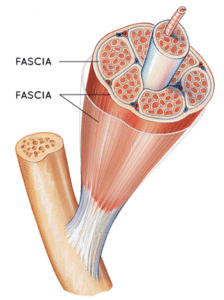
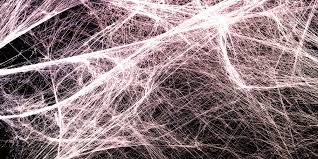
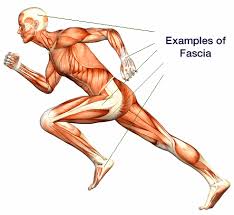
The fascial system is the only whole-body system, covering, interpenetrating and controlling every structure, system and
cell of our body. It is a glide system, a system of communication, functioning like a fiber optic carrying an enormous amount of information and energy throughout our mind-body. Fascia is also the main transport medium for the food that we eat, the fluid we drink, and the oxygen we breathe for the biochemicals, hormones, energy and information that the trillions of our cells need to thrive. The ground substance is the fascia’s fluid component, the immediate environment of every cell. Fascia restrictions can impede proper cellular metabolism, respiration, nutrition, elimination and lymphatic flow. Fascia is also the home of the phagocyte and can influence the immune system in a negative way. Basically, fascia restrictions can create the environment of pain, headaches, dysfunction, physiological chaos, disease and necrosis.
Function & Molecular Structure
Fascia can resist both pulling (tensile) and compressive forces. Therefore, it contains two elements: fibers and inner fibular jelly or ground substance. The fibers resist tensile stresses, and the jelly-like filling between the fibers resists compressive forces. Proteoglycans are polymers that form the gel between the collagen fibers, which is a three-dimensional web. Hyaluronic acid is lubrication that facilitates the glide of the tissue. The gel is our major shock absorber. The molecule that makes up the major part of the fibrous material in the body is collagen. Collagen does not form linear fibers, but is rather a three-dimensional web. Collagen is a protein, which is a Greek word meaning glue-producer, consisting of three poly-peptide chains twisted around each other in a triple helix. Interestingly, the release attained by myofascial release feels like glue pulling. The fluid within this three dimensional web actually also has a three-dimensional structure and is considered to be a liquid crystal. The characteristics of a liquid crystal are both fluid and solid and have a chaotic period when released that allows for change.
Seven Billion Possibilities
It is important to understand that fascial restrictions do not show up in any of the standard tests such as CAT Scans, MRIs, X-rays, myelograms or blood work. Therefore, fascial restriction has been misdiagnosed for many years. It is also important to understand that when we are traumatized, fascial restrictions can create a tensile strength of approximately 2,000 pounds per square inch of pressure. This is the equivalent of two full-grown horses standing on a nerve. The art of myofascial release is to find the individual restrictions, which are different from one client to the next, considering there are more than seven billion people in the world. (This means there are more than seven billion different possibilities of fascia strain patterns.) Various research studies and reviews have been published on myofascial release and are easily found on the U.S. National Library of Medicine National Institues of Health website: ncbi.nlm.nih. gov/pubmed. The way I teach myofascial therapists is to use their proprioceptive senses to feel the restrictions and then use gentle but firm pressure. Part of the art is proper pressure; too heavy of a pressure throws the client’s mind into protection. This is the problem with deep-tissue massage; it’s too aggressive and painful, so the subconscious has no alternative but to go into protection. Once this happens, no healing is possible and only temporary results occur. If pressure is too light, the therapist is not engaging in the collagenous barrier and the session will also produce short-term results.
Engage the Barrier
A distinction between myofascial release and various other forms of massage and bodywork is that the therapist finds the individual’s restrictions and takes the slack out without sliding on the surface. This enables the myofascial therapist to then use the fascia system as an amazing lever that reaches deeply into the body where significant problems are located. Engage the barrier. It then takes 90 to 120 seconds to begin to engage the collagenous barrier. It then takes another three to five minutes for a deeper, more long-lasting result. There is an absolute minimum of five minutes required of each technique. The maximum benefit of all forms of massage therapy, mobilization and exercise will be achieved by coupling this technique with the sustained pressure of myofascial release. Somewhere around the five-minute period, there is a number of phenomena that occur that do not always occur with other forms of massage and bodywork, and that lead us into what I consider to be authentic healing. Around five minutes, the technique will start to elicit the piezoelectric effect. Piezoelectricity is a Greek word meaning pressure electricity. Our cells have a crystalline nature, and when you apply pressure into a crystal it generates electrical flow. In our body it’s a bioelectrical flow, which is another way of describing the motion of the mind. We call that unwinding. Piezoelectricity is usually coupled with mechanotransduction. Using sustained pressure creates a biochemical, hormonal effect at the cellular level. I believe that many of the biochemical problems that people have actually come from fascia restrictions on the cellular level and that a thwarted inflammatory response solidifies the ground substance, which can lead to disease. One study on this topic is “Dosed myofascial release in three dimensional bioengineered tendons: effects on human fibroblast hyperplasia, hypertrophy, and cytokine secretion,” published in 2013 in The Journal of Manipulative and Physiological Therapeutics.
Phase Transition
We then move into phase transition, which is the phenomenon where ice transforms into water. Ice is not found in the body; however, but after trauma, the ground substance, which should be fluid, starts to solidify and turns into crushing pressure on pain-sensitive structures that produce the symptoms that led our clients to us. You and I have been brought up to believe there are three phases of water: ice, water and vapor. Now it has been discovered there is a fourth phase. It is the fluid in the cell and the ground substance of the fascia that is actually a liquid crystal capable of change. (For in depth information on this topic, read The Fourth Phase of Water: Beyond Solid, Liquid, Vapor, by Gerald Pollock, one of the world’s experts on fluid dynamics. For more information, visit pollacklab.org.) There is a chaotic period as one moves into the phase transition that allows for change, growth and healing, so that which has solidified can become more fluid. This allows tissue to glide again and take the horrendous pressure off of painsensitive structures that fascia restrictions can produce. Release occurs when 2,000 pounds of pressure is taken off a pained structure, and the therapist is able to glide tissue. Many forms of massage and bodywork are beneficial; however none of them sustain pressure long enough, so depending on your clients’ needs it could be valuable to combine myofascial release with massage, bodywork or energy work for maximum effectiveness. Myofascial release therapists do not use lotions because this technique does not include hands sliding on the skin. The therapist’s hands go slowly into what I call the depth barrier, which is toward the table, until mild resistance is felt. The therapist doesn’t force through resistance; that is the old form of myofascial release, which is an attempt to force a system that cannot be forced. Instead, this work is like making handprints in soft clay. Without sliding,
the therapist opens the hands in opposite directions. The first give felt is the elastic and muscular component. This is what proponents of other forms of massage and bodywork thought was release, but it’s not; it’s incomplete, only 20 percent of the fascial system. The reason the therapist doesn’t slide is to enable him or her to use the fascial system as a lever.
The Fascia as Lever
The fascia becomes an effective lever, allowing us to reach deep into the body where the important restrictions are. The therapist’s hands then come to a dead halt at the collagenous barrier, or the other 80 percent of the fascial system. The myofascial therapist will wait there patiently without forcing or sliding. Again, it takes about 90 to 120 seconds to even begin to engage with the collagenous barrier and at least another three to five minutes for a meaningful release. The bottom line is, the art of myofascial release is to find the barrier, which is very different in every human being, and then apply appropriate pressure for five or more minutes. When the fascia releases there’s a sense of softening, like butter melting or taffy stretching. We still don’t slide, but we find another barrier; most people have multiple barriers. Myofascial release could be the missing link that, when coupled with your area of expertise, can enhance everything you do in your session room.
John F. Barnes, P.T., L.M.T. (myofascialrelease.com), is an international lecturer, author and acknowledged expert in the area of myofascial release. He has instructed more than 100,000 therapists worldwide in his myofascial release approach. He is the author of Myofascial Release: The Search for Excellence (Rehabilitation Services Inc., 1990) and Healing Ancient Wounds: The Renegade’s Wisdom (Myofascial Release Treatment Centers & Seminars, 2000). He is a National Certification Board for Therapeutic Massage & Bodywork-approved continuing education provider.