
Is Chiropractic safe for my infant?
The baby is crying, you don’t know what is wrong, and your partner is as tired as you are… how do you help your infant? Many things could be the cause including colic, digestive issues, pain, and ear or sinus infections to name a few. There are many paths that can be taken in this scenario, but one that many parents typically do not consider is chiropractic care. Unless their pediatrician mentions it, most parents do not know it is an option. There are safe and effective techniques for treating an infant without the use of drugs, as well as a variety of health benefits to keep them well.
Social media is a double-edged sword that has reinforced both the fear and appreciation for chiropractic. For those addicted to the “crack”, this is not the article for you. Babies are made mostly of cartilage at birth and slowly ossify and fuse as they grow. Due to the fusion of bones, babies can be born with anywhere from 270-300 bones, compared to a full adult who has 206. These significant differences between the skeletal makeup of adults and infants, means that to treat infants effectively, a chiropractor needs to do further specialized education in pediatric development, anatomy, and adjustment techniques. These specialized techniques use sustained contact, gentle vibration, and gentle muscle work. The adjustment is done without an audible pop and is applied with on average 2 ounces of pressure or with a specialized Activator tool with only 20 newtons of force.

There are many claims about what conditions chiropractic care can actually help in regard to the human body. Chiropractors subscribe to the philosophy that removal of nerve interference via the chiropractic adjustment, helps the body to function at its best, and therefore heal. Based on that philosophy, chiropractors should be able to help with most neurological and musculoskeletal issues. In short, they can affect most things in the body by going to the root cause, nerves. Researchers have done many studies to determine if a) that is true in general, b) is it safe for infants, and c) is it effective for infants?
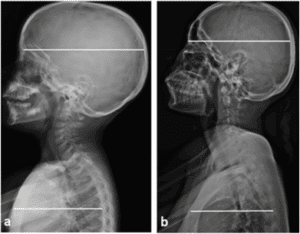
Diving into the literature of pediatric chiropractic can be confusing. What many studies, randomized control trials, and systematic reviews concluded is that chiropractic care for pediatrics is safe and effective for treating musculoskeletal conditions and spinal posture correction. This evidence is based on x-ray (specifically using the Chiropractic Biophysics techniques), and improvement of symptoms. These symptoms are often movement deficits, such as only breast feeding on one side, inability to meet developmental milestones, and unexplained crying. Other signs of physical pain are included as well. The NIH, The Journal of Churna Manual Medicine for Spine and Nerves, Chiropractic News, Journal of Contemporary Chiropractic, and Journal of Integrative and Complementary Medicine have all published research in the past 5 years that support the safety and use of chiropractic care for musculoskeletal conditions.
Other research has focused on the effect of the chiropractic adjustment on a variety of other pediatric conditions. Commonly, for those in the know, chiropractors claim to treat colic, constipation, nighttime crying, and nocturnal enuresis. The University of Denmark performed a meta-analysis on the efficacy of chiropractic care in the treatment of nighttime crying (2023). Based on this analysis, there were 4 recommendations:
- This meta- analysis suggests a positive effect for the most relevant outcome— crying time. It indicates no issues with adverse effects— in fact, the only reported adverse event was in a control group.
- The confidence in the magnitude of the effect estimate is limited.
- The widespread use of osteopathic and chiropractic treatment for infantile colic indicates a widespread interest among patients.
- Manual and osteopathic treatment is inexpensive.
A different study, (Hoeve et al 2021) set out to determine if a colicky infant has evidence of neurological dysregulation. After determining that colicky infants do show signs of vestibular dysregulation, there was then subsequent evidence that manual treatment using vibrational stimulation (sustained contact) to relax the musculature decreased vestibular hyperactivity signifying improvement in the brain stem!

Another example of a measurable outcome of chiropractic care in the treatment of colicky babies, could be seen in a single-blind study published in 2021 by Holme et al. This randomized control trial determined that after 4 treatments, (2 a week for 2 weeks) had a positive outcome of reducing infant crying time by half hour per night! Chiropractic Biophysics, which is a technique based largely on x-ray and restoring proper spinal posture, found a reduction in other symptoms pediatric participants reported such as, headache, sinus infection, otitis media, and nocturnal enuresis (bedwetting). More specifically, a meta-analysis was published in 2022 providing moderate evidence that osteopathic manipulative therapy helped pre-term and term infants with gastrointestinal issues. It even states, after evaluating all the research available that fit this criterion that “In terms of safety, no included study reported serious sequelae even when treating a sensitive population such as preterm infants.” This further shows the safety and benefits of chiropractic care in such young populations
Overall, there is support for chiropractic treatment for a wide variety of conditions. The most support, most likely due to the volume of research focused on it, goes to treatment of musculoskeletal conditions. For other conditions, there is some evidence showing chiropractic can treat colic, ear infection, constipation, and autonomic dysregulation. Before any strong recommendations are made in regard to infant chiropractic treatment of non-musculoskeletal conditions, more research is needed. For best practices, it is prudent to co-manage your infant’s healthcare with their pediatric physician and discuss the possible options and outcomes with a chiropractor for treatment of your little one.
References:
- https://pmc.ncbi.nlm.nih.gov/articles/PMC2794701/
- Chiropractic Care for Infants: Addressing Common Concerns and Misconceptions
- Frontiers | Clinical Evidence of Vestibular Dysregulation in Colicky Babies Before and After Chiropractic Treatment vs. Non-colicky Babies
- Hoeve J (2021) Clinical Evidence of Vestibular Dysregulation in Colicky Babies Before and After Chiropractic Treatment vs. Non-colicky Babies. Front. Pediatr. 9:668457. doi: 10.3389/fped.2021.668457
- Acta_Paediatrica_2023_Hestbaek.pdf
- The effect of chiropractic care on infantile colic: results from a single-blind randomised controlled trial | Chiropractic & Manual Therapies
- Holm, L.V., Jarbøl, D.E., Christensen, H.W. et al. The effect of chiropractic care on infantile colic: results from a single-blind randomised controlled trial. Chiropr Man Therap 29, 15 (2021). https://doi.org/10.1186/s12998-021-00371-8
- Systemic literature review on the effects of chiropractic and manual therapy on children with night crying -The Journal of Churna Manual Medicine for Spine and Nerves | Korea Science
- Clinical Practice Guideline for Best Practice Management of Pediatric Patients by Chiropractors: Results of a Delphi Consensus Process | Journal of Integrative and Complementary Medicine
- Complementary/Integrative Medicine for Pediatric Otitis Media – Otolaryngologic Clinics of North America
- Use of osteopathic manipulation techniques for management of acute otitis media in pediatric patients: a scoping review | European Archives of Oto-Rhino-Laryngology
- IMPROVING THE PEDIATRIC CERVICAL LORDOSIS: A REVIEW OF CHIROPRACTIC BIOPHYSICS® CASE REPORTING | Published in Journal of Contemporary Chiropractic
- Gross, A. R., Olson, K. A., Pool, J., Basson, A., Clewley, D., Dice, J. L., & Milne, N. (2024). Spinal manipulation and mobilisation in paediatrics – an international evidence-based position statement for physiotherapists. Journal of Manual & Manipulative Therapy, 32(3), 211–233. https://doi.org/10.1080/10669817.2024.2332026
- Osteopathic Treatment for Gastrointestinal Disorders in Term and Preterm Infants: A Systematic Review and Meta-Analysis
- Do Children in Australia Benefit from Chiropractic Care? – ProQuest