

Chiropractic Recap
Chiropractic is a non-invasive drug free treatment that consists of correcting the root cause of pain and symptoms by adjusting the spine and taking pressure off the nervous system. Picture your nervous system as a large highway. At each level, there is an exit ramp for your nerves to branch off and travel to their specific destinations in the body. Sometimes, these off ramps are slow due to the activities of daily life: stress, trauma, exercise, nutrition, medication, driving, computer work, etc. When this happens, the signals from the spine to the body are slower or blocked and can massively affect every system in the body.
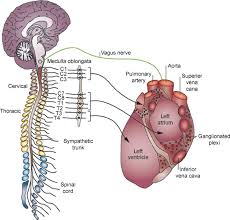
For example, the heart is run by the autonomic nervous system and beats without conscious control. The heart is innervated by the nerves of the upper back, typically T1-T4. This is a common area to find nerve interference due to posture changes from driving, texting, and computer work. If these nerves are impinged upon (off ramp too small) where they exit from the spine, it can affect everything from fast heart rate to arrythmia. By applying the chiropractic adjustment, the interference to the nerve is removed, allowing proper electrical communication to the heart and promoting healing within the nervous system. Please read below for an example of how chiropractic may be able to help your heart!
Effect of chiropractic care on heart rate variability and pain in a multisite clinical study
Abstract
Objective: The purpose of this study is to investigate the effect of chiropractic care in a multiclinic setting on sympathetic and parasympathetic nervous system activities using heart rate variability (HRV) analysis.
Methods: Physicians of chiropractic in private practice were provided with an HRV device to perform analysis before and after chiropractic adjustments on 10 subjects. At each site, 8 subjects were monitored before and after a single chiropractic adjustment, and 2 additional patients were followed for a 4-week period with 2 HRV recordings per week. Patient information forms and a visual analog scale (VAS) questionnaire were completed both before and after each chiropractic adjustment.
Results: Data from 96 physicians were divided into single-visit and 4-week groups. After 1 chiropractic adjustment, pain as analyzed by VAS was reduced significantly from 3.7 +/- 2.2 to 2.1 +/- 2.0 (P < .001). The mean heart rate reduced from 76.7 +/- 12.7 to 74.3 +/- 12.4 (P < .01), the SD of normal-to-normal QRS increased from a range of 55.8 to 44.6 to a range of 60.6 to 47.2 (P < .001), the high-frequency component increased from 359 +/- 968 to 444 +/- 1069 (P < .01), the low-frequency component increased from 403 +/- 753 to 465 +/- 755 (P < .05), and the total power increased from 1063 +/- 1886 to 1265 +/- 2048 (P < .01). After 4 weeks of chiropractic adjustments, pain measured by the VAS was reduced significantly before and after each visit as analyzed by t tests, but the significant changes were not found using analysis of variance analysis. The reduction of pain from each treatment was not maintained over the 4 weeks of study period. The analysis of variance on the HRV 4-week data found that changes in the SD of normal-to-normal QRS, total power, and low-frequency components reached statistically significant levels (P < .05). The heart rate and the high-frequency component did not change significantly (P > .05).
Conclusion: In this study, HRV and VAS changed in patients as a result of chiropractic care.